

Optimizing Your Projects with Advanced Plumbing Fixtures: A Guide for Professionals
In the modern construction and design landscape, selecting the right plumbing fixtures is no longer a mere afterthought. Today’s projects demand solutions that prioritize user experience, water efficiency, hygiene, and aesthetic cohesion. For architects, contractors, and project managers, understanding the technical and design nuances of key product categories is essential for delivering spaces that meet contemporary standards. This professional guide examines five pivotal product types—Sensor Faucet, Kitchen Faucet, Basin Faucet, Shower Solution, and Bidet Mixer—and provides actionable insights for specification and integration.
Sensor Faucet: Engineering Touchless Efficiency
The Sensor Faucet represents a critical convergence of public health awareness and sustainable design. Beyond its basic hands-free operation, modern sensor technology incorporates sophisticated features that project professionals must consider:
Technical Specifications for Specification:
Activation Technology: Prioritize infrared sensors with adjustable range settings (typically 5-25 cm) to prevent false triggers and ensure reliable operation in varied sink configurations.
Power Systems: Offer clients options between low-voltage AC adapters for high-traffic commercial applications and long-life lithium battery units (often providing 2-5 years of operation) for residential retrofits.
Flow Rate Control: Specify models with adjustable flow rates (typically 0.5-1.2 GPM) to meet both conservation goals and user expectations across different regions.
Safety Features: Include models with temperature limiting functions and fail-safe shut-off mechanisms in specifications for healthcare and educational facilities.
Installation Considerations: Sensor faucets require precise installation with adequate clearance for sensor field operation. Always verify power source availability during the rough-in phase and ensure accessibility for future maintenance.
Kitchen Faucet: The Hub of Functional Design
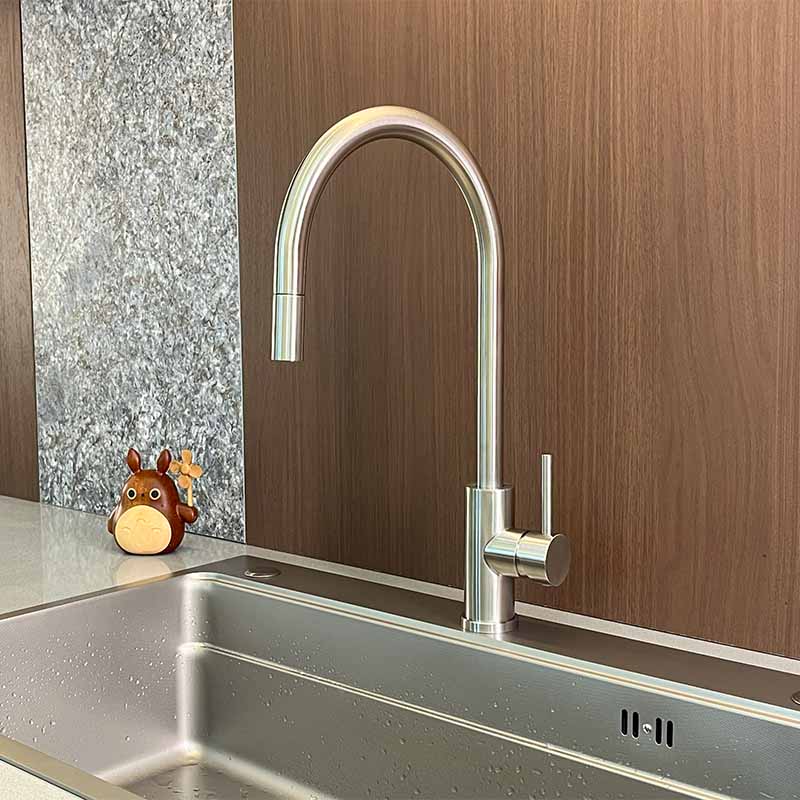
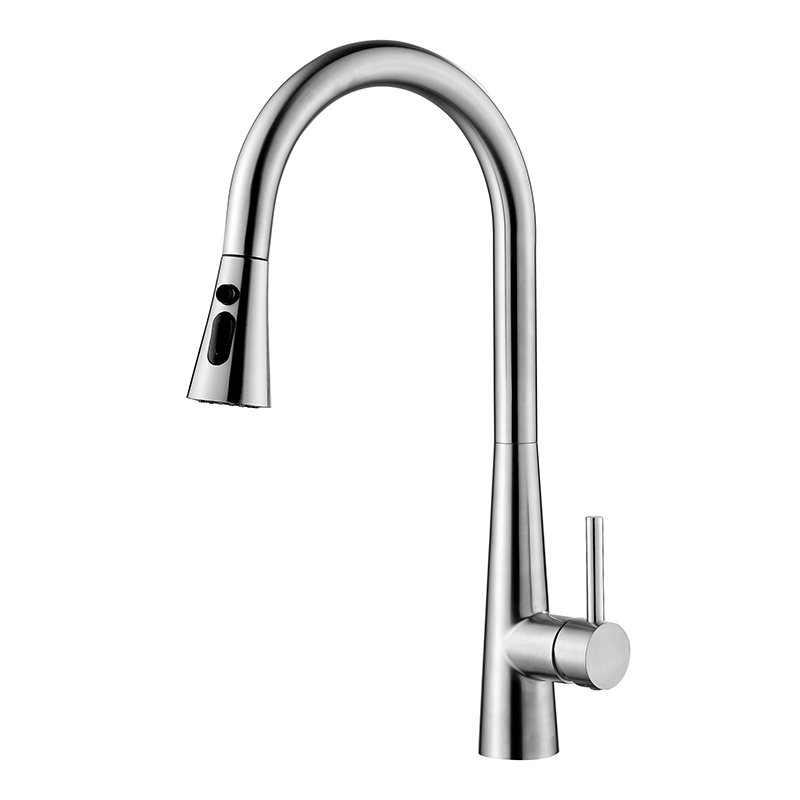
The Kitchen Faucet serves as the operational center of any culinary space, demanding both durability and intelligent design. Current market innovations have transformed this essential fixture into a sophisticated tool:
Performance-Driven Selection Criteria:
Mobility Systems: Specify pull-down faucets with 360-degree swivel and magnetic or weight-based docking systems for superior functionality. Ensure hose length (typically 20-30 inches) adequately serves the entire sink basin.
Valve Technology: Insist on ceramic disc valve construction with a minimum lifecycle of 500,000 cycles to prevent leaks and ensure long-term reliability.
Integration Capabilities: Highlight models with integrated water filtration systems, instant hot water dispensers, or connectivity with smart home systems for premium projects.
Ergonomic Design: Consider handle placement and operation—single-lever designs offer intuitive temperature control while cross handles provide precise adjustment.
Material Specifications: Recommend solid brass construction with corrosion-resistant finishes. For commercial applications, specify commercial-grade models meeting ASSE 1016 or equivalent standards.
Basin Faucet: Balancing Aesthetics and Performance
The Basin Faucet establishes the visual tone of bathroom spaces while requiring precise technical specification to ensure optimal performance:
Design and Technical Integration:
Mounting Configurations: Provide comprehensive options including:
Single-hole installations for minimalist designs
Widespread configurations (4-16 inch centers) for traditional vanities
Wall-mounted units for floating vanity applications
Spout Projection: Specify appropriate spout reach (typically 1.5-5 inches) to ensure water flow centers properly in the sink basin, preventing splash and optimizing functionality.
ADA Compliance: Maintain ADA-compliant models in your catalog, featuring lever handles requiring less than 5 pounds of force to operate and meeting specific clearance requirements.
Finish Durability: Educate clients on finish classifications, emphasizing PVD (Physical Vapor Deposition) finishes that offer superior resistance to corrosion, tarnishing, and wear compared to standard electroplated finishes.
Shower Solution: Creating Systematic Bathing Experiences
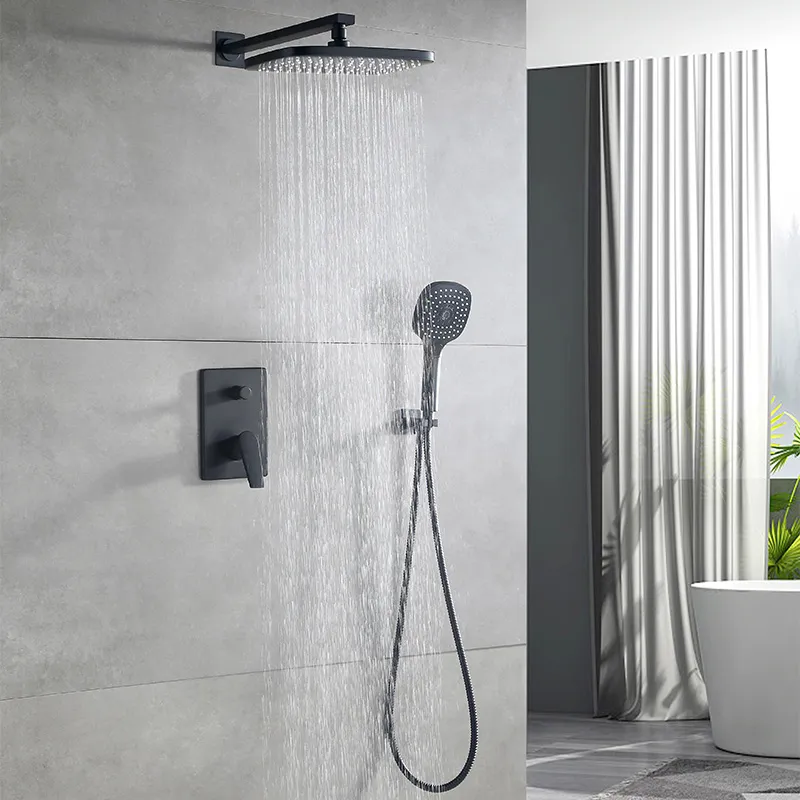
Modern Shower Solutions have evolved into engineered systems requiring coordinated specification of multiple components:
Systematic Approach to Shower Design:
Valve Technology Specification:
Pressure-balancing valves (ASSE 1016/1070) for basic temperature stability
Thermostatic valves (ASSE 1017) for precise temperature control (±2°F)
Digital/electronic valves offering programmable settings and user presets
Flow Management: Specify systems with adjustable flow restrictors, allowing customization from water-saving 1.5 GPM settings to more generous 2.5 GPM flows while maintaining pressure compensation.
Component Coordination: Ensure compatibility between valves, diverters, showerheads, and body sprays regarding connection types (1/2" IPS standard), pressure requirements, and finish matching.
Safety and Accessibility: Include barrier-free shower solutions with linear drains, properly sloped bases, and integrated seating options. Specify grab bar reinforcement provisions during framing stages.
Bidet Mixer: Integrating Advanced Hygiene Solutions
The Bidet Mixer category has diversified significantly, requiring knowledgeable specification to match appropriate technology to project requirements:
Product Category Specification Guide:
Bidet Toilet Seats: Specify electrical requirements (typically 120V GFCI-protected outlet) and feature sets ranging from basic warm water wash to advanced functions including:
Oscillating and pulsating wash patterns
Heated seats with multiple temperature settings
Warm air drying systems
Deodorization filters
Integrated Smart Toilets: Outline rough-in requirements, water supply specifications, and electrical needs during planning phases. Highlight features like automatic lids, self-cleaning functions, and water efficiency ratings.
Handheld Bidet Sprayers: Specify heavy-duty retractable hoses, metal valve construction, and appropriate mounting hardware for durability.
Installation Planning: Emphasize the importance of planning electrical and water connections during initial design stages, particularly for integrated smart toilet and heated seat installations.
Integration Strategy: Creating Cohesive Plumbing Systems
Professional project execution requires seamless integration of all plumbing components:
Coordination Framework:
Design Phase Integration:
Coordinate finish selections across all fixtures (Sensor Faucet, Kitchen Faucet, Basin Faucet, Shower Solution trim, Bidet Mixer)
Verify compatibility of valve technologies and pressure requirements
Plan electrical and plumbing rough-ins holistically
Performance Specification:
Establish consistent water efficiency goals across all fixtures
Specify compatible connection types and valve access requirements
Document maintenance and service requirements for building owners
Sustainability Integration:
Calculate cumulative water savings using EPA WaterSense or equivalent metrics
Specify systems that enable future upgrades and adaptability
Consider life-cycle costs alongside initial investment
Documentation and Handover: Provide comprehensive operation manuals, warranty information, and maintenance schedules for all specified fixtures, emphasizing the integrated nature of the plumbing system.
Specification as Strategic Practice
In today's competitive construction environment, fixture specification represents a strategic practice that directly impacts project success, occupant satisfaction, and long-term building performance. By developing deep expertise in Sensor Faucet technologies, Kitchen Faucet functionalities, Basin Faucet aesthetics, Shower Solution systems, and Bidet Mixer innovations, project professionals can deliver spaces that excel in form, function, and efficiency.
The most successful projects will be those where plumbing fixtures are not selected in isolation but specified as an integrated system—each component complementing the others to create cohesive, high-performing environments. This approach not only enhances the immediate user experience but also contributes to the long-term sustainability and value of the built environment.
For project professionals seeking technical specifications, BIM objects, or product data sheets for Sensor Faucet, Kitchen Faucet, Basin Faucet, Shower Solution, or Bidet Mixer products, consult with manufacturers who provide comprehensive documentation to support informed specification and seamless integration.